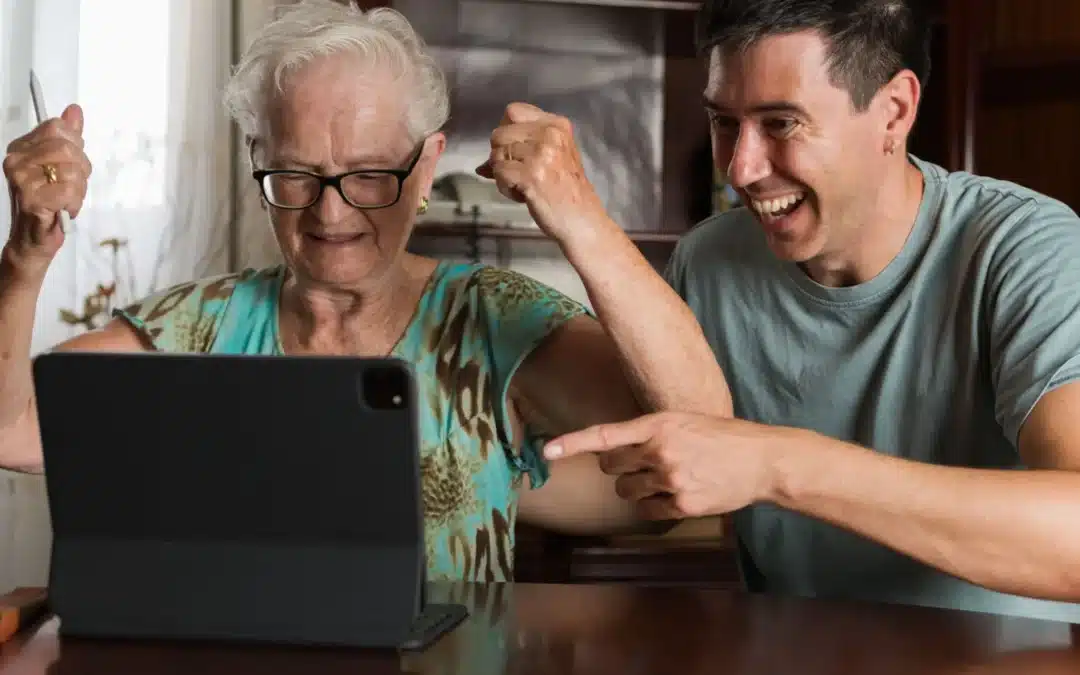

Beyond the Phone Call: Why Standard Tech Fails Our Elders (And What Actually Works)
We all know the feeling. You are sitting at your desk, perhaps miles away or even in a different country, and a sudden thought grips you: I haven’t spoken to Mum or Dad in two days.
For us, it is a fleeting moment of guilt in a busy schedule. For the 3 million elderly people currently living alone in the UK, that silence can be their entire reality.
We often view loneliness as a mood—a temporary sadness. But the data tells us it is a health crisis. Isolation and loneliness are not just uncomfortable; they contribute to a 60% increased risk of dementia. With the UK’s elderly population set to rise by 40% in the next two decades, and dementia cases projected to increase by 62% by 2040, the stakes for effective elderly support have never been higher.
The challenge isn’t that we don’t want to connect. It’s that the tools we rely on—the ones that work so well for us—often build walls instead of bridges for our ageing parents, threatening their ability to maintain successful independent living.
The "Healthtech Gap": Why Standard Tools Fail Seniors
When we realize our parents are struggling with isolation, our first instinct is to equip them with the technology we use daily. We install a smart speaker, set them up on WhatsApp, or send a tablet link for a Zoom call.
But for a senior with cognitive decline, tremors, or limited digital literacy, these consumer tools are not viable healthtech. They can become sources of anxiety rather than aid. Here is why the standard solutions often fall short of providing true elderly support:
1. Smart Speakers (e.g., Amazon Echo)
-
- The Promise: Voice activation seems perfect for seniors with mobility issues to maintain independent living.
-
- The Reality: These devices rely heavily on memory. Users must remember specific “wake words” and command phrasing (“Alexa, call…”), which can be incredibly frustrating for those with early-stage dementia. Furthermore, standard audio-only models lack the vital visual cue of seeing a loved one’s face, which is key to reducing the isolation that harms health.
2. Messaging Apps (e.g., WhatsApp)
-
- The Promise: It is ubiquitous. “Everyone is on WhatsApp,” so it feels like the natural choice for family updates.
-
- The Reality: The interface is often hostile to ageing eyes and hands. Small touch targets, confusing icons, and frequent app updates create constant friction. A simple “update now” pop-up can feel like an insurmountable barrier, leading many seniors to abandon the device entirely, cutting off a vital line of elderly support.
3. Video Conferencing (e.g., Zoom/Skype)
-
-
The Promise: Great for group calls and seeing the whole family at once.
-
-
- The Reality: These tools are “user-initiated.” They require the senior to find a link, click it, turn on the camera, and unmute the microphone. If your loved one is confused or napping, the call simply doesn’t happen. The burden of technology is placed on the person least able to carry it.
A New Era of Healthtech: Connection Without Friction
This landscape of “imperfect choices” is exactly why BondNow was created.
The vision for BondNow was sparked by a deeply personal moment. During a family visit in April 2023, our founder noticed his father mention a random sentence completely out of context—a subtle, terrifying sign that his cognitive abilities were shifting.
He realized that standard tech wouldn’t work. He didn’t need a gadget; he needed a dedicated healthtech solution to support his father’s daily life across the ocean. BondNow was built with a different philosophy: Accessibility First.
How BondNow Changes the Dynamic:
-
Zero-Touch Connection: Unlike WhatsApp or Zoom, BondNow uses auto-answering audio and video calls. There are no buttons to press, no swipes to master. You start the call, and your face simply appears in their home. It is a fully remote-controlled application, requiring no input from the end user—vital for sustainable independent living
-
A “Passive” Connection: When not in use, the device doesn’t sit black and lifeless. It transforms into a real-time photo frame. You can share a photo of your day instantly, turning the device into a source of constant, gentle joy rather than a piece of scary tech.
-
More Than Just Calls: BondNow is designed as a comprehensive elderly support platform. Today, it serves as your communication hub, a digital photo frame, and a reminder device to help structure the day.
Restoring Dignity Through Technology
The goal of technology shouldn’t be to make our elders “tech-savvy.” It should be to make the technology invisible, so the relationship can shine through.
Through BondNow, we aim to provide families with the tools to stay connected and provide meaningful elderly support to those who need it the most—whether they’re next door or oceans apart. You don’t have to face these challenges alone.